Brooches have been used for centuries to decorate clothing, express personal style, and showcase artistic creativity. Today, they remain popular accessories because they can transform a simple outfit into something elegant and distinctive. The beauty of these accessories often comes from the materials used to create them, including metals, gemstones, beads, fabrics, wood, and other decorative elements. 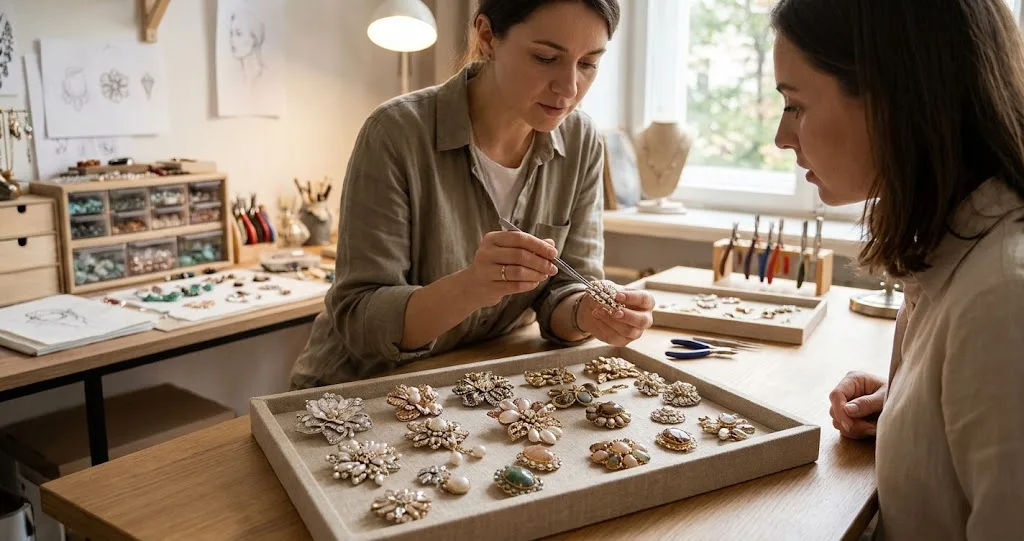 Understanding these materials helps buyers choose pieces that match their style, budget, and lifestyle.
Handcrafted brooches are particularly special because each piece reflects the creativity, skill, and attention to detail of its maker. Unlike many mass-produced accessories, handmade designs can feature unique combinations of colors, textures, and materials. Some are delicate and traditional, while others are bold, modern, or inspired by nature.
The materials selected for a brooch influence its appearance, durability, weight, comfort, and overall value. For example, a silver brooch with gemstones may create a luxurious appearance, while a fabric flower brooch offers a soft, colorful, and casual look. Learning about the different materials available makes it easier to appreciate the craftsmanship behind these accessories and select the right piece for any occasion.
1. Metals Used in Brooch Making
Metal is one of the most common materials used to create brooches. It provides structure, supports decorative elements, and helps the finished accessory maintain its shape. Depending on the design, metal can create a traditional, elegant, rustic, or contemporary appearance.
Sterling Silver
Sterling silver is a popular choice for high-quality brooches because of its attractive shine and versatility. It generally contains 92.5% silver and 7.5% other metals, commonly copper, which improves its strength.
Silver works well for floral patterns, geometric shapes, animal figures, and detailed decorative designs. Its neutral color also complements gemstones, pearls, enamel, and colored beads.
However, sterling silver can tarnish when exposed to air, moisture, and certain chemicals. Regular cleaning and appropriate storage help preserve its appearance.
Gold and Gold-Plated Metal
Gold is valued for its warm color, elegance, and association with luxury. Solid gold brooches can be expensive, so some artisans use gold-plated metals to achieve a similar appearance at a lower cost.
Gold-plated pieces usually have a thin layer of gold over another metal, such as brass or silver. Their durability depends on the thickness of the plating, the underlying metal, and how frequently the brooch is worn.
Gold-colored designs are especially suitable for formal occasions, celebrations, and vintage-inspired accessories.
Brass
Brass is an alloy primarily made from copper and zinc. It is widely used in decorative jewelry because it is workable, relatively affordable, and naturally golden in color.
Artisans can shape brass into leaves, flowers, animals, abstract designs, and intricate patterns. It can also be polished, textured, oxidized, or plated to achieve different finishes.
Brass is a practical choice for people who want attractive jewelry without the cost of precious metals. However, some brass alloys may discolor or cause skin reactions in sensitive individuals, depending on their composition.
Copper
Copper is known for its reddish-brown color and distinctive appearance. It is especially popular in rustic, bohemian, and nature-inspired jewelry.
Artisans can bend copper wire, hammer copper sheets, or combine copper components with stones and beads. Over time, untreated copper may develop a darker surface or greenish patina.
This changing appearance can add character to a design, although protective coatings may be used when a brighter finish is preferred.
Stainless Steel
Stainless steel offers strength, durability, and resistance to corrosion. It is often used for brooch pins, backing plates, and modern decorative components.
Because it is generally more resistant to everyday wear than many untreated metals, stainless steel can be a sensible choice for frequently worn accessories.
People with metal sensitivities should still check the specific alloy and any nickel content rather than assuming every stainless steel item is suitable for them.
2. Gemstones and Crystals
Gemstones and crystals can transform a simple brooch into an eye-catching accessory. They introduce color, sparkle, texture, and visual depth.
Natural Gemstones
Natural gemstones are minerals that have been cut, polished, or shaped for decorative use. Depending on the design, artisans may use amethyst, garnet, turquoise, quartz, jade, or other stones.
Each gemstone has its own color variations and natural patterns. These differences make individual pieces distinctive, particularly when the stones are arranged by hand.
Some gemstones are relatively hard and suitable for regular wear, while others are softer or more vulnerable to scratches. Their durability depends on the specific stone, its treatment, and how securely it is mounted.
Semi-Precious Stones
The term semi-precious is commonly used in jewelry to describe many decorative gemstones that are not traditionally classified as precious stones. Examples include agate, jasper, and various forms of quartz.
These materials are available in a wide range of colors and patterns, making them suitable for creative designs. Artisans may use polished cabochons, small beads, or irregular stone pieces to create natural-looking arrangements.
Glass Crystals and Rhinestones
Glass crystals and rhinestones provide sparkle without requiring expensive gemstones. They are frequently used in vintage-inspired, glamorous, and statement brooches.
Clear crystals can imitate the appearance of diamonds from a distance, while colored versions create bright decorative effects.
Their quality varies. Well-cut crystals can reflect light beautifully, but poorly secured stones may fall out during wear. Checking the settings and adhesive work is therefore important.
Pearls
Pearls add a soft glow and timeless elegance. Both natural and cultured pearls may appear in fine jewelry, while glass, shell, and other imitation pearls are often used in affordable decorative designs.
Freshwater cultured pearls are a common option for elegant accessories. They work well with silver, gold-colored metal, fabric flowers, and vintage-inspired settings.
Because pearls can be sensitive to chemicals, perfume, and abrasion, they require gentle cleaning and careful storage.
3. Beads and Decorative Components
Beads are among the most versatile materials used in brooch making. They are available in countless colors, shapes, sizes, and finishes, allowing artisans to create intricate patterns without relying on expensive materials.
Glass Beads
Glass beads can be transparent, opaque, glossy, frosted, or metallic-looking. Their variety makes them suitable for floral arrangements, abstract patterns, and colorful decorative motifs.
Seed beads are particularly useful for detailed embroidery and tightly arranged designs. Larger glass beads can serve as focal points in statement pieces.
Acrylic and Plastic Beads
Acrylic and plastic beads are lightweight and often less expensive than glass or natural stones. They are available in bright colors and unusual shapes, making them useful for playful, modern, and novelty designs.
Their low weight can make larger brooches more comfortable to wear. However, lower-quality plastics may scratch, fade, or become brittle over time.
Wooden Beads
Wooden beads create a natural, warm appearance. They are often used in rustic, earthy, and bohemian accessories.
Artisans may leave wood in its natural state, stain it, paint it, or carve decorative details into its surface. Wooden components should be protected from excessive moisture to reduce the risk of swelling, cracking, or warping.
Sequins and Metallic Embellishments
Sequins add reflective surfaces and movement to fabric-based brooches. Small metallic charms, decorative studs, and tiny bells can also provide extra detail.
These components are useful for festive accessories, embroidered flowers, and elaborate statement designs. They should be attached securely so that they do not loosen during normal use.
4. Fabric and Textile Materials
Fabric offers a softer alternative to metal and stone. Textile brooches are often lightweight, colorful, and comfortable, making them suitable for scarves, sweaters, dresses, and other garments that may not support heavier accessories.
Silk
Silk is valued for its smooth texture, natural sheen, and elegant appearance. It can be folded, gathered, layered, or shaped into realistic-looking flowers.
Silk brooches are particularly suitable for weddings, formal events, and delicate outfits. However, silk may require more careful handling than synthetic fabrics because it can be damaged by moisture, friction, or harsh cleaning products.
Felt
Felt is a thick textile made by matting fibers together rather than weaving them into a conventional fabric. Wool felt and synthetic felt are both used in handmade accessories.
Felt is easy to cut into shapes and can be layered to create flowers, leaves, animals, and decorative figures. It is especially popular for colorful, casual, and seasonal designs.
Its soft texture also reduces the risk of sharp edges that may be present in some metal components.
Cotton and Linen
Cotton and linen provide natural textures and are suitable for embroidered or fabric-covered brooches. Cotton is generally soft and versatile, while linen has a slightly crisp, textured appearance.
Artisans may dye these fabrics, paint them, embroider them, or combine them with beads and lace.
These materials are excellent for simple, handmade designs that emphasize texture and craftsmanship rather than shine.
Ribbon, Lace, and Embroidery Thread
Ribbon can be folded into loops, petals, bows, and layered floral shapes. Lace introduces delicate patterns, while embroidery thread allows artisans to add outlines, lettering, and decorative stitching.
Combining these materials creates depth without making the accessory excessively heavy.
However, textile components can fray or collect dust, so neat finishing and careful storage are important.
5. Wood and Natural Materials
Natural materials appeal to people who appreciate organic textures and designs inspired by the outdoors. Their variations often make every finished piece slightly different.
Wood
Wood can be carved, cut, painted, engraved, or polished into decorative shapes. Lightweight woods are especially useful for larger brooches because they reduce strain on clothing.
Common choices vary by region and availability. Some artisans use locally sourced wood, while others choose plywood or engineered wood for consistent shapes.
A suitable protective finish can help prevent moisture damage and surface wear.
Shell and Mother-of-Pearl
Shell pieces and mother-of-pearl provide subtle iridescence. They can reflect pink, green, blue, and white tones depending on the light and the material.
These materials are often used in floral, coastal, vintage, and nature-inspired designs. They pair particularly well with silver-colored metal and neutral fabrics.
Shell components may chip if dropped or struck, so protective settings and careful handling are helpful.
Dried Flowers and Leaves
Dried flowers, leaves, and other botanical elements can be incorporated into decorative brooches. Artisans may preserve them in resin or attach them to a supportive backing.
These designs offer a delicate connection to nature and can feature real petals, tiny leaves, or grasses.
Because natural plant materials may become brittle or change color over time, the preservation method and protective finish influence their lifespan.
Feathers
Feathers provide softness, movement, and texture. They are sometimes used in theatrical, vintage, ceremonial, or fashion-focused brooches.
Their suitability depends on the design, the feather's source, and applicable wildlife regulations. Feathers also require careful handling because they can bend, break, or collect dust.
6. Resin and Enamel
Resin and enamel allow artisans to create colorful surfaces, glossy finishes, and intricate decorative effects.
Resin
Resin is a material that can harden into a solid form through a curing process. Depending on its formulation, it can be transparent, translucent, or opaque.
Artisans may embed dried flowers, glitter, small decorative objects, or colored pigments in resin. This creates a protected display of the materials inside.
Resin is particularly useful for contemporary and nature-inspired designs. However, uncured resin can pose health risks during production, so makers should follow the product's safety instructions and use appropriate protective equipment.
Finished resin pieces should also be protected from excessive heat and prolonged sunlight, which can cause some formulations to discolor or deteriorate.
Enamel
Enamel creates a smooth, colorful surface on a metal base. Traditional vitreous enamel uses powdered glass fused to metal through high heat, while some modern decorative finishes use other coating methods.
Enamel can be applied in bright blocks of color, delicate patterns, or detailed illustrations. It is popular in floral, animal, geometric, and commemorative brooch designs.
The quality of the finish matters because chipped enamel can expose the underlying metal. Although enamel can be durable, it should not be treated as completely resistant to impact.
7. Clay and Ceramic Materials
Clay-based materials offer another way to create unusual shapes and detailed decorative features.
Polymer Clay
Polymer clay is a moldable synthetic material that hardens when baked according to the manufacturer's instructions. It comes in many colors and can be mixed, layered, textured, and sculpted.
Artisans use it to create miniature flowers, fruits, animals, abstract shapes, and patterned designs.
One advantage is that polymer clay can produce relatively lightweight accessories. Its final strength depends on the material, thickness, construction, and baking process.
Ceramic and Porcelain
Ceramic and porcelain components offer a more traditional, handcrafted appearance. They may be molded, painted, glazed, or decorated with fine patterns before firing.
These materials can produce beautiful results, but they are generally more vulnerable to impact than flexible textiles or many metals.
Ceramic brooches are best stored carefully and worn where they are less likely to be knocked against hard surfaces.
8. The Importance of Backings, Pins, and Fasteners
The decorative surface is only one part of a brooch. The backing and fastening mechanism determine how securely the accessory attaches to clothing.
Metal Pin Backs
Most traditional brooches use a metal pin attached to a backing plate. The pin passes through the fabric and secures with a clasp or catch.
The pin should open and close smoothly, remain aligned, and hold firmly when fastened. A weak clasp can cause the accessory to fall off, regardless of how beautiful its decorative materials are.
Stainless steel and other suitable metals are commonly used for fastening components because they can provide strength and practical resistance to wear.
Safety Clasps and Locking Mechanisms
Some designs use locking catches or safety mechanisms that reduce the risk of accidental opening. These can be especially useful for expensive, heavy, or frequently worn accessories.
A secure fastening system is important when a brooch is attached to a coat, thick scarf, or other garment that experiences movement.
Backing Plates and Adhesives
Backing plates support decorative elements and help distribute the brooch's weight. Depending on the design, they may be made from metal, felt, wood, or another suitable material.
Adhesives can attach stones, fabric, resin components, and other decorative parts. The adhesive must be appropriate for the materials being joined, and mechanical settings or stitching may provide additional security.
For pieces intended for regular wear, construction quality is just as important as the materials on the visible surface.
9. How Materials Affect Quality and Durability
Not all brooch materials perform in the same way. Choosing the right combination depends on how the accessory will be worn, stored, and maintained.
Strength and Wear Resistance
Metal components usually provide a strong framework, while fabric, paper-based decorations, and delicate botanical elements may need extra protection.
Gemstones and crystals can remain attractive for years when mounted securely, but they may chip or loosen if the accessory is dropped.
A well-designed brooch balances decorative beauty with a structure that can withstand ordinary use.
Weight and Comfort
Weight matters because a heavy accessory can pull on thin clothing, stretch fabric, or tilt forward when pinned.
Lightweight materials such as felt, polymer clay, and thin wood can be suitable for larger designs. Metal and gemstone pieces may need a stronger pin and a thicker garment to remain secure.
For delicate fabrics, choose a lightweight brooch and test its fastening carefully before wearing it for an extended period.
Color and Finish
Materials influence how a brooch looks under different lighting conditions. Polished metal reflects light, matte wood creates a softer effect, and transparent crystals add sparkle.
Fabric, enamel, and colored resin allow more freedom with bold shades and patterns. Natural stones and shells contribute unique variations that cannot always be reproduced exactly.
The best material combination depends on the intended style and the colors of the clothing with which the brooch will be worn.
Skin Sensitivity
Some people experience skin irritation from particular metals, coatings, or residues. Nickel is a common cause of allergic contact dermatitis.
Although a brooch usually attaches to clothing rather than directly to the skin, the pin or backing may touch the wearer. Choosing materials with known compositions and avoiding unsuitable alloys can help reduce unwanted reactions.
10. How to Choose the Right Materials for Your Brooch
Selecting materials becomes easier when you consider the accessory's purpose before focusing on its appearance.
Consider the Occasion
For formal occasions, silver, gold-colored finishes, pearls, crystals, and elegant fabrics can create a refined look.
For everyday outfits, brass, stainless steel, felt, wood, and durable beads may offer a practical balance of style and affordability.
Nature-inspired accessories can feature shells, dried flowers, wood, or botanical elements preserved in resin.
Match the Brooch to the Garment
Thick coats can generally support heavier accessories than lightweight blouses or delicate scarves. However, the strength and weave of the fabric also matter.
A large metal brooch may be suitable for a wool coat, while a small felt or fabric design may work better on a thin shirt.
Always consider whether the pin could leave a visible hole, snag loose threads, or stretch the fabric.
Set a Realistic Budget
Precious metals and natural gemstones generally cost more than brass, glass beads, acrylic, or polymer clay. However, price alone does not determine quality.
An affordable brooch can be well designed and carefully constructed. A more expensive piece should offer appropriate craftsmanship, secure fittings, and reliable information about its materials.
Look for clear descriptions of metal composition, gemstone type, plating, and construction when purchasing from an artisan.
Think About Maintenance
Some materials require more care than others. Pearls, silk, dried flowers, and untreated wood may need gentle handling, while stainless steel and many glass components are comparatively easy to maintain.
Consider whether you are willing to clean and store the accessory carefully. Choosing materials that suit your daily routine can help you enjoy the brooch for longer.
11. Caring for Different Brooch Materials
Proper care preserves both the appearance and structure of a handmade accessory.
Cleaning Metal Components
Wipe metal surfaces with a soft, dry cloth after wearing them. Use a suitable metal cleaner only when the product's instructions permit it.
Avoid applying harsh chemicals to pieces containing pearls, resin, enamel, glued stones, or fabric because these materials may react differently.
Protecting Gemstones and Pearls
Store gemstone and pearl brooches separately to reduce scratches. Keep them away from perfume, hairspray, household cleaners, and excessive moisture.
Inspect the settings occasionally to check whether any stones have loosened.
Maintaining Fabric and Natural Materials
Use a soft brush to remove dust from fabric, feathers, and dried botanical elements. Avoid soaking these components unless the maker confirms that the materials can tolerate water.
Keep textile and wooden brooches in a dry environment, away from prolonged direct sunlight and extreme temperatures.
Storing Brooches Safely
A lined jewelry box, individual pouch, or compartmentalized organizer can prevent scratches and tangling. Fasten the pin before storage when appropriate, and avoid placing heavy objects on delicate pieces.
Good storage habits are especially important for accessories made from several different materials because each component may have different care requirements.
12. Why Material Selection Matters in Handcrafted Jewelry
Material selection affects far more than a brooch's color or price. It shapes the design possibilities, the time required to make the accessory, its expected lifespan, and the experience of wearing it.
For artisans, choosing suitable materials involves balancing appearance, availability, workability, and construction. A design that combines metal with delicate fabric, for instance, may need a supportive backing and carefully planned attachment points.
For buyers, understanding the materials makes it easier to distinguish between different styles and evaluate whether a piece suits their needs. A decorative accessory made with inexpensive materials can still be valuable as a work of art when it demonstrates originality and excellent craftsmanship.
Some makers also use recycled metals, reclaimed fabric, responsibly sourced wood, or reused decorative components. These choices can reduce waste and give discarded materials a new purpose. However, the environmental benefits depend on the materials' origins, processing methods, and overall production practices.
When purchasing handcrafted brooches, ask the maker about the materials, construction techniques, care requirements, and any known limitations. Clear answers help you understand what you are buying and how to preserve it.
Conclusion
The materials used to create brooches range from traditional metals and gemstones to fabric, wood, beads, resin, enamel, clay, shells, and other natural elements. Each material contributes its own appearance, texture, weight, and practical qualities. The right combination depends on the artisan's design, the intended occasion, the garment being decorated, and the level of maintenance the wearer can provide.
Metals such as sterling silver, brass, copper, and stainless steel offer structure and different finishes. Gemstones, pearls, glass crystals, and beads introduce color and decorative detail. Fabrics such as silk, cotton, felt, and ribbon create softer designs, while wood, shells, and dried flowers bring natural character. Resin, enamel, polymer clay, and ceramic components allow further creativity and individuality.
The fastening mechanism deserves equal attention because even beautiful materials cannot compensate for a weak pin or poorly constructed backing. Buyers should also consider weight, durability, skin sensitivity, and care requirements before choosing an accessory.
Ultimately, handcrafted brooches stand out because they combine material choices with human creativity and skilled workmanship. Understanding the materials behind each design helps you appreciate the effort involved, make informed purchasing decisions, and select pieces that complement your wardrobe. Whether you prefer a simple fabric flower, a colorful beaded design, or an elegant gemstone piece, the best brooch is one that reflects your personal style while meeting your practical needs.